Stretching your Fabric
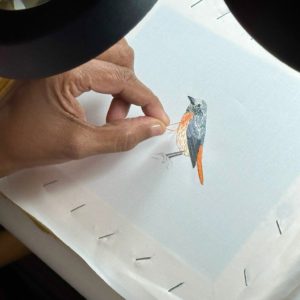
Stretching your fabric correctly is absolutely vital. It is one of the most important steps in achieving good results with thread painting. The fabric should be “drum tight” before stitching and firm enough that it cannot slip partway through the process. There is nothing worse than investing a lot of work only to find the fabric has loosened. This will radically affect the appearance and can be difficult to recover. See the video here for an example of the correct tension.
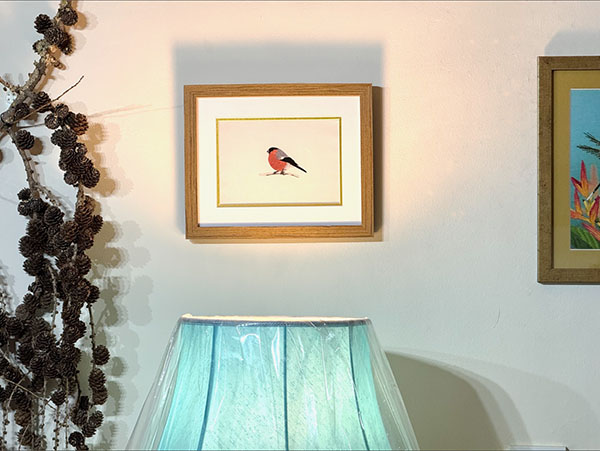
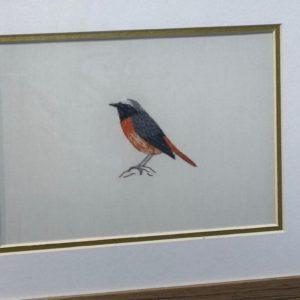
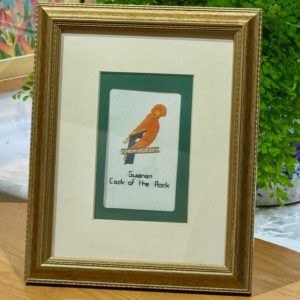
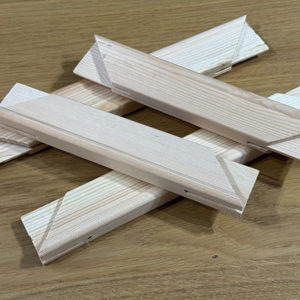
You also need to think about how you are going to display the finished work. If fabric is removed from a frame after being tightly stretched, it can crumple badly. After trying many different options, we now leave most work in the stretching frame permanently. Much like a painting on canvas, the work is framed in a mount using strong frames similar to those used for canvas painting.
This approach differs from more traditional embroidery, which is typically intended for clothing, furnishings, linens, or other functional objects. In those cases, the embroidery must remain flexible and robust, with a similar feel to fabric. When creating work purely for display, however, the canvas can be much more rigid.
It is possible to stitch on looser fabric if needed, and we have done so in the past. However, it is far more problematic and requires greater care and time. In particular, you must ensure that thread tension is even across the entire piece and that the fabric remains consistently flat and evenly tensioned throughout.
The suitability of looser fabric also depends on the pattern. Smaller, simpler beginner designs are much more forgiving. Larger and denser work places greater strain on the fabric, increasing the risk of problems and the amount of work lost if the fabric goes slack.
There are many possible approaches, and the best method depends partly on the individual and the specific characteristics of the fabric used. Traditional embroidery hoops are an option, and this is how we started. If you are familiar with this method, it may be a good place to begin. The quality of the hoop and your skill in using it make a difference. It is often better to do a good job with a less ideal method than a poor job with a better one. That said, our experience is that fabric in hoops is prone to slipping. While it can be retightened, this is not ideal.
We have also tried narrower interlocking frames designed specifically for embroidery. These tend to be flimsy and can bend or warp, leading to inconsistent tension.
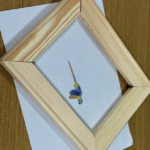
Ultimately, we find that more substantial frames such as those used for stretching artists’ canvases are the best option. Artists have used them for centuries for good reason. They work. Since switching to these frames, we are able to stretch fabric tighter, find the process easier, and achieve better results. The main reason to use hoops instead is when working on very large items, such as a bedsheet, where working section by section makes sense. This again reflects the difference in final use and technique.
When it comes to attaching fabric to a frame, staples are hard to beat. A staple gun is required, but they are inexpensive. We recommend an electric staple gun. Ours came from Lidl and works well.
It is possible to stretch material around a frame in the traditional artist’s manner, and this has many advantages. However, it requires a considerable excess of fabric around the edges. While this works well with loose canvas, we print our designs onto fabric using an inkjet printer. Allowing for that excess would require much larger prints, increasing production time, resources, and costs. For this reason, we prefer stapling. If you are transferring a design manually, however, stretching in this way is well worth considering.
Thumbtacks can also be used, but they are tedious and difficult to work with.
We describe our full procedure below. As with everything, practice makes a big difference, and you will develop your own technique over time. The key principles are even fabric alignment and even tension. Start by aligning the weft of the fabric with the edge of the frame. We begin in the middle of one side, though some people prefer starting in a corner. Everyone has their own approach. This is simply what works best for us.
Finally, remember that staples can be removed and the fabric retightened if you notice any unevenness. A good staple remover is essential. We recommend investing in a quality one.